Framework Applied · Clock II · June 11, 2026
The deal was “two or three days away.” Four strike waves later, the Strategic Petroleum Reserve is bleeding 8 million barrels a week — and the public story requires constant maintenance to survive.
There are two stories running in parallel right now, and they cannot both be true.
Story one: a deal is imminent, the Strait of Hormuz reopens upon signing, and markets have already priced in resolution. Story two: the Strategic Petroleum Reserve sits at 357.1 million barrels — its lowest level since 1983 — after bleeding 8 million barrels in a single week, with Brent crude climbing 2% to $92 a barrel as four confirmed US strike waves hit Iranian infrastructure. The federal government’s own energy forecasters project Hormuz shipments won’t resume until Q3 and full recovery won’t arrive until early 2027.
One of these stories requires constant maintenance energy. The other does not.
The Numbers
The SPR was built to hold 714 million barrels. It is currently at 357.1 million — exactly half capacity, and the lowest reading since Ronald Reagan was in his second year in office. The week ending May 29 alone saw a draw of nearly 8 million barrels. The EIA’s June 10 weekly report confirmed commercial crude stocks fell another 7.2 million barrels to 426.5 million — approximately 5% below the five-year average for this time of year.
Shell’s CEO put a number on the global supply hole last week: 1.2 billion barrels. That is the cumulative deficit the oil market has accumulated from the Hormuz disruption and the Iran war. The SPR was designed to buffer a 90-day supply interruption. At current draw rates, it cannot.
WTI is trading near $89.71. Brent is at $92 and rising. The 52-week range runs from $54.98 to $117.63 — and the trajectory is upward, not down, as strike wave confirmations hit the wire.
The inflation picture compounds the energy data. One day after CPI hit 4.2% — the highest in three years — May PPI came in at 6.5%, above expectations, the highest since November 2022. Core PPI printed at 4.9%. Both inflation measures are running hot simultaneously while Hormuz is formally closed. The economic pressure is not lagging the conflict. It is running alongside it.
Tier 2 — Framework Analysis
This is Clock II behavior. The economic architecture of the conflict — not the kinetic layer — is where the structural pressure accumulates. The SPR draw is not a side effect of the war. It is the war’s economic signature.
The Thermodynamic Law of Information holds that deception produces escalating friction signatures — maintenance energy that compounds over time. The public narrative that “a deal is days away” has now survived three missed deadlines, four strike waves, and a CPI print of 4.2% — the highest in three years. Each maintenance cycle costs more than the last.
The Falsifier Problem
On June 9, President Trump stated a deal was “two or three days away” and that Iran would “immediately” reopen Hormuz upon signing. On June 10, Trump announced Iran had “taken too long” and would “pay the price.” Defense Secretary Hegseth, speaking from CENTCOM: “Will be hitting Iran hard. Strong and clear tonight. Strong and clear tomorrow if needed.”
This is not ambiguity. This is a falsified prediction within a 24-hour window — what the Framework identifies as Signature B behavior: a stated negotiating position that cannot survive contact with the actual decision architecture behind it. The public statement and the operational reality are running on separate tracks.
Vance told reporters a deal could take “a week or months.” Trump said two or three days. These are not two officials offering honest assessments of uncertainty. They are two maintenance signals pointing in opposite directions, which means at least one is not load-bearing.
Tier 2 — Framework Analysis
When two senior officials in the same administration offer contradictory timelines on the same day, the Framework does not average them. It treats the divergence itself as the signal. Private/public divergence is the first of the Five Markers — and it requires no inference here. The contradiction is on the record.
The Hidden Architecture
Last month, while the administration publicly maintained a Hormuz blockade posture, the US Navy was secretly escorting 100 million barrels of oil through the strait. Trump himself confirmed the operation — framing it as proof that “the US controls Hormuz, not Iran.”
This is not a contradiction of the blockade narrative. It is the blockade narrative’s economic counterpart — the private architecture running beneath the public signal. The JPMorgan dark tanker analysis, flagged in earlier Framework synthesis, identified this divergence before the official confirmation. It is now Tier 1.
The question the SPR data forces is straightforward: if the US controls Hormuz, why is the reserve drawing at emergency rates? If the deal is days away, why is Brent at $92 and climbing on strike wave news? The public story and the balance sheet cannot both be correct.
On June 11, the objective became explicit. Trump signaled a “Venezuela-style” takeover of Kharg Island — one-third the size of Manhattan, sitting in the Persian Gulf, controlling approximately 90% of Iranian crude oil exports. That is 1.5 to 2 million barrels per day. This is not a negotiating position. This is the oil infrastructure as the stated end objective. The blockade was never purely about the nuclear deal. It was about the asset.
Tier 2 — Framework Analysis
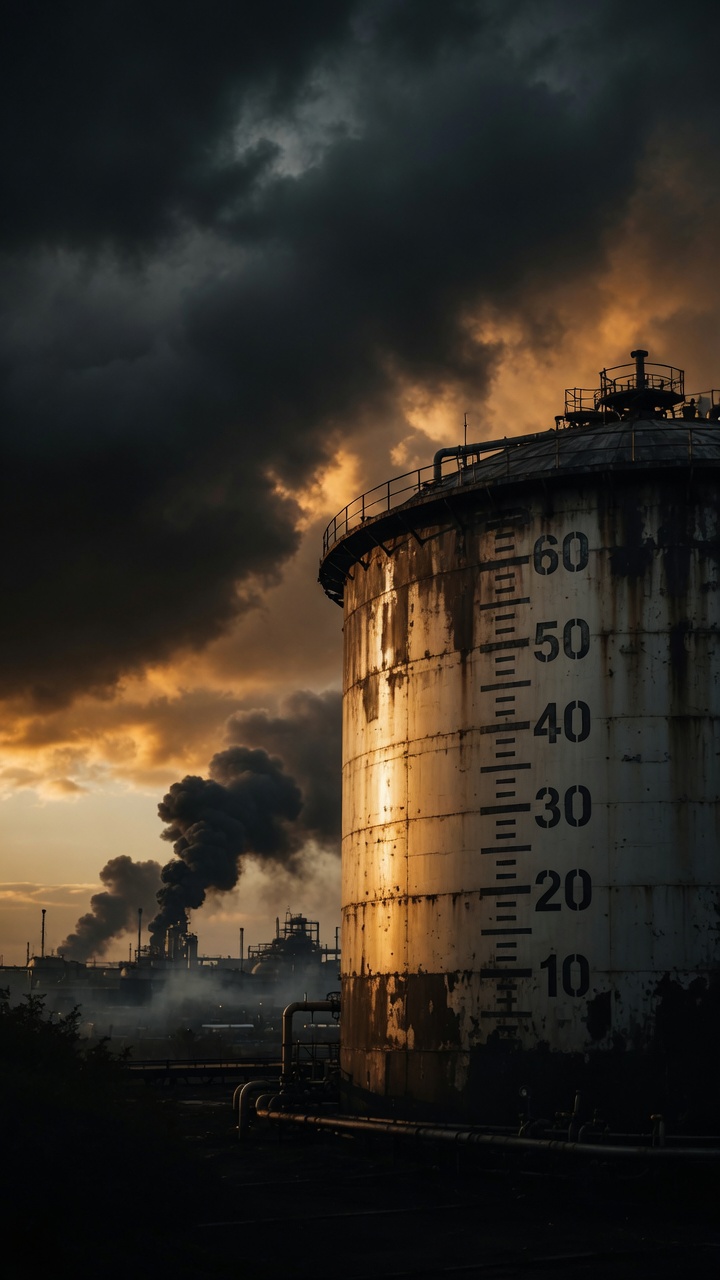
The balance sheet does not lie. Governments can control press releases. They cannot control the weekly EIA report. The SPR drawdown is a thermodynamic measurement — the actual energy cost of sustaining the current operational posture. At 357.1 million barrels, the reserve is exactly half empty. The gauge is public. The maintenance required to explain why it doesn’t matter is not.
What to Watch
The Framework runs falsifiers against every thesis. Three remain active for this read:
Falsifier 1 — Deal closes this week: If a signed agreement produces a verified Hormuz reopening timeline, the SPR draw halts and this thesis weakens. Currently: falsified. The “two or three days” window closed with strike waves, not signatures.
Falsifier 2 — Emergency SPR refill authorized: A presidential order to halt draws and begin refill purchases would change the balance sheet read. No such order has been issued.
Falsifier 3 — Oil price collapse on ceasefire news: A sudden drop in Brent below $80 on confirmed deal news would indicate market acceptance of the narrative. As of June 11: Brent is rising, not falling.
None of the falsifiers have fired. The thesis holds.
The reserve is at its lowest point in four decades. The weekly draw rate is emergency-level. The public story says resolution is imminent. The balance sheet says the opposite.
One of these will require maintenance next week. The other will not.
SOURCES — TIER 1
· EIA Weekly Petroleum Status Report, June 10, 2026 (data week ending June 5, 2026)
· EIA Weekly Petroleum Status Report, June 3, 2026 (data week ending May 29, 2026) — SPR 357.1M figure
· CENTCOM official account — Strike wave confirmations, June 10, 2026
· Trump statement: “Iran has taken too long. Now they will pay the price.” — June 10, 2026
· Hegseth at CENTCOM: “Will be hitting Iran hard. Strong and clear tonight.” — June 10, 2026
· Trump: deal “two or three days away” — June 9, 2026
· Trump confirms secret Navy Hormuz escort mission — June 10, 2026
· Vance: deal could take “a week or months” — June 10, 2026
· Shell CEO: oil market 1.2 billion barrels in deficit — June 2026
· Brent crude: ~$92/barrel June 10, 2026
· WTI: ~$89.71, June 10, 2026
· CPI 4.2%, June 10, 2026 — highest since April 2023
· PPI 6.5% May 2026 — highest since November 2022; Core PPI 4.9% (BLS via Kobeissi Letter, June 11, 2026)
· Trump Kharg Island signal: “Venezuela-style” oil infrastructure seizure (Kobeissi Letter, June 11, 2026)
· Polymarket US-Iran deal tracker, June 10, 2026 — MOU unsigned, no firm timeline
Framework analysis sections are labeled Tier 2 and represent interpretive reads on verified data. Tier 1 claims are sourced above. The Frequency Framework methodology is published at SSRN Abstract 6576661.
THE FREQUENCY FRAMEWORK
Truth requires zero maintenance energy. · patreon.com/TheFrequencyFramework


Leave a Reply